
Cement Kiln Dust – odprašky – nový certifikovaný produkt CEMMAC
In June this year, CEMMAC obtained certification from the Technical and Test Institute for Construction (TSÚS) for its Cement Kiln Dust (CKD) product. This achievement confirms that even a by-product of the clinker production process can become a valuable construction material when properly processed and applied.
What Is Cement Kiln Dust (CKD) and How Is It Produced?
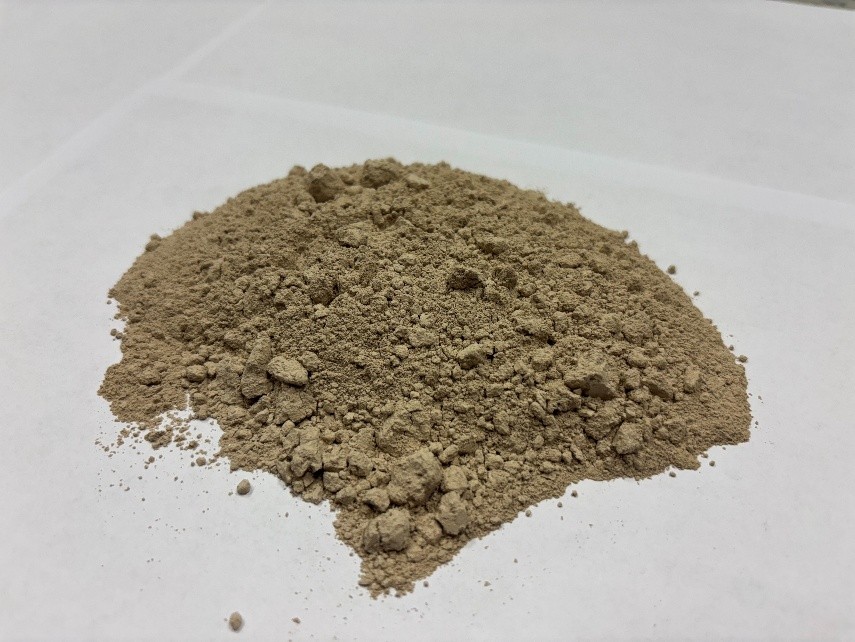
During clinker production in the rotary kiln, a fine inorganic powder known as Cement Kiln Dust (CKD) is generated alongside the main product. CKD is a by-product collected by the kiln bypass dust collection system. It consists of a complex mixture of minerals, including partially calcined raw meal and clinker particles, together with chlorides, alkalis, and calcium compounds.
Thanks to its chemical composition, CKD exhibits hydraulic properties similar to those of cement. However, due to its higher free lime (CaO) content, it cannot be used as a standalone binder and must always be combined with other hydraulic binders.
Applications
Cement Kiln Dust can be used in a variety of construction applications, including:
-as a constituent of cement;
-as a solidification additive;
-in the production of construction materials;
-as a constituent of hydraulic road binders and soil stabilization mixtures.
When used as an additive, CKD can improve certain properties of hydraulic binders, such as workability and water retention.
According to STN EN 13282-1 and STN EN 13282-2, CKD may be incorporated into hydraulic road binders (HRB) at levels of up to 10% by mass.
For construction products containing CKD, the mass activity index of naturally occurring radionuclides must be monitored. The dosage of CKD should be adjusted to ensure that the finished construction product complies with the applicable reference limits.
In accordance with Clause 5.3 of STN EN 197-1, CKD may only be used in cement in quantities that ensure the total chloride content of the cement does not exceed 0.1%.
Chloride content is the principal quality parameter monitored for CKD. At CEMMAC, it is maintained within a target range of 5–9% through controlled blending with dust collected from the kiln line dedusting system.
Typical Chemical Composition
Component Content
CaO 25–55%
SiO₂ 5–18%
Al₂O₃ 1–5%
Fe₂O₃ 0.5–3%
MgO <3%
Na₂O <2%
K₂O 10–40%
SO₃ <10%
Cl⁻ 3.5–13%
Free CaO <30%
Handling and Storage
CKD is supplied in bulk by tanker trucks and must be protected from moisture during transport and storage. Exposure to moisture reduces its flowability and may cause the material to agglomerate.
The recommended maximum storage period is three months from the date of dispatch. Material stored for a longer period should be re-tested before use to confirm that it continues to meet the required specifications.
Why Certification Matters
The certification issued by the Technical and Test Institute for Construction (TSÚS) confirms that CEMMAC's Cement Kiln Dust complies with all relevant technical and environmental requirements.
For CEMMAC, this certification not only expands the company's portfolio of certified products but also represents another important step towards more sustainable manufacturing. By transforming a production by-product into a valuable construction material, the company reduces waste and promotes the efficient use of resources.
This is a practical example of how technical innovation and environmental responsibility can go hand in hand.
Kvalita a inovácie sú našou hlavnou prioritou